
Private equity entered 2026 with widespread optimism that exit activity would accelerate after several years of constrained liquidity. Sponsors were under increasing pressure to improve distributions to limited partners (DPI), aging portfolio companies were approaching traditional monetization windows, and improving financing markets were expected to unlock a growing backlog of unrealized investments. While the broader private equity market continues to work through this portfolio overhang, Health IT has proven comparatively resilient.
Despite navigating a succession of macroeconomic shocks, including inflation, sharply higher interest rates, renewed tariff uncertainty following Liberation Day in April 2025, geopolitical tensions in the Middle East, and the emergence of AI-driven SaaSpocalypse, Health IT buyout activity has remained remarkably durable. Unlike many enterprise software markets, Health IT continues to benefit from competitive moats created by HIPAA-protected data, deeply embedded clinical workflows, regulatory complexity, high switching costs, and mission-critical applications. As healthcare also represents one of AI’s largest long-term opportunities given its vast stores of unstructured data, these characteristics may ultimately benefit more incumbent Health IT platforms than many other software sectors. Rather than derailing investment activity, these events appear to have reinforced a new reality: elevated volatility has become a persistent feature of the market rather than a temporary disruption.
Like the broader private equity market, Health IT has accumulated a growing inventory of unrealized investments as buyouts have consistently outpaced exits. Interestingly, however, this trend cannot be attributed primarily to COVID-era investment activity. Health IT buyout volumes from 2020 through 2022, which we believe reflected unusually intense competition from strategic acquirers, were actually below the exceptionally active 2018-2019 period. Exit activity also remained healthy during these years, preventing a meaningful buildup of inventory. The more important caveat is that many investments completed during the COVID period occurred at elevated valuation multiples, likely extending the time required to achieve attractive exits.
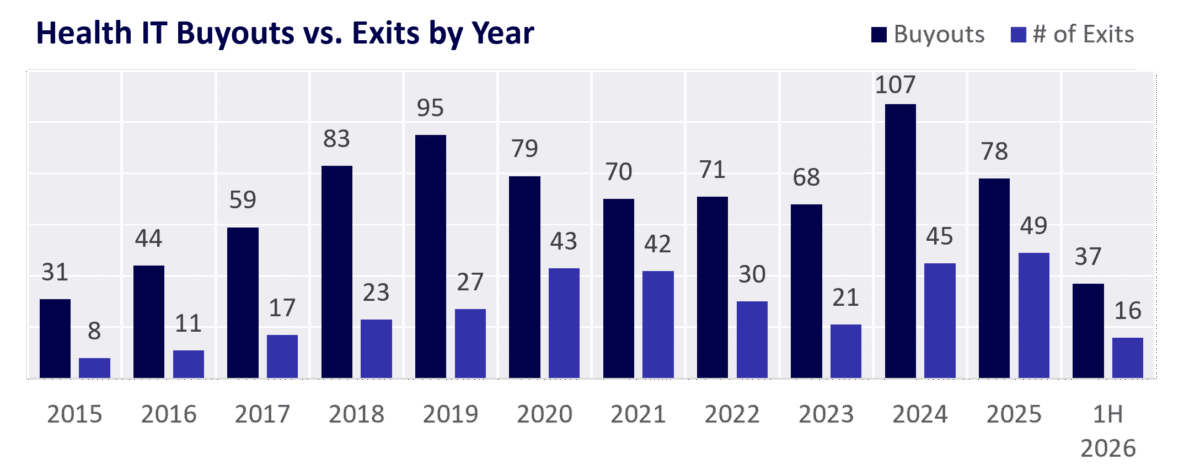
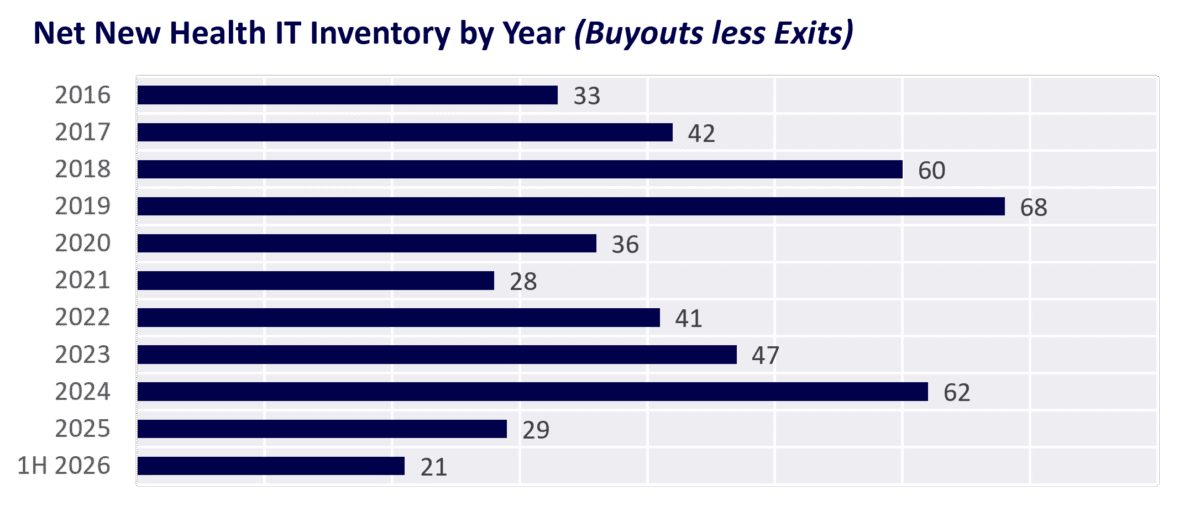
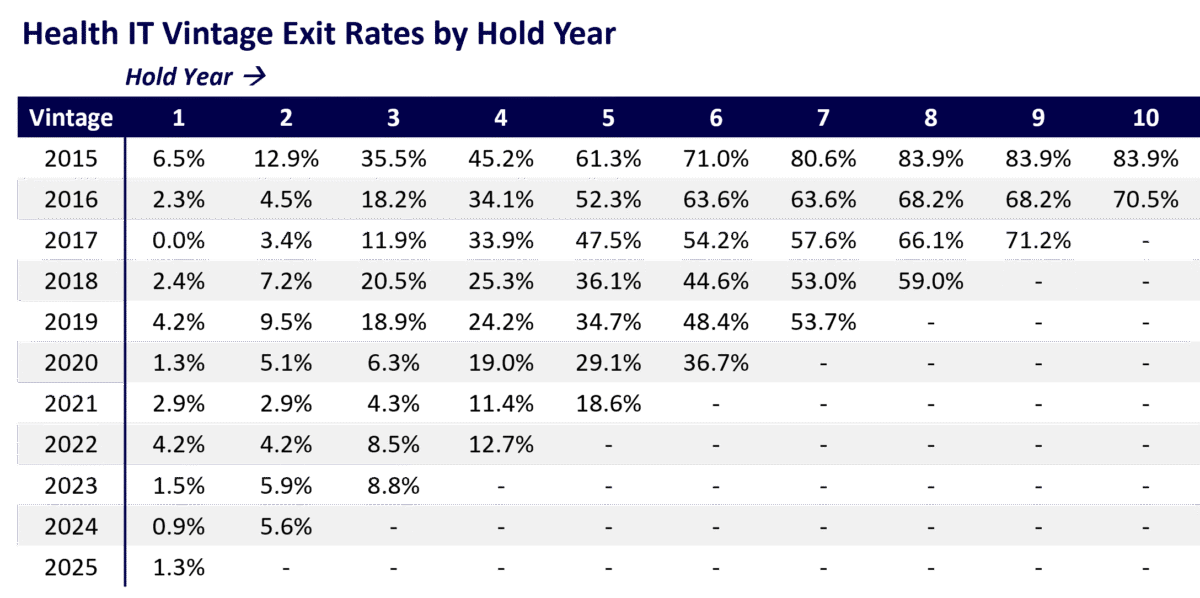
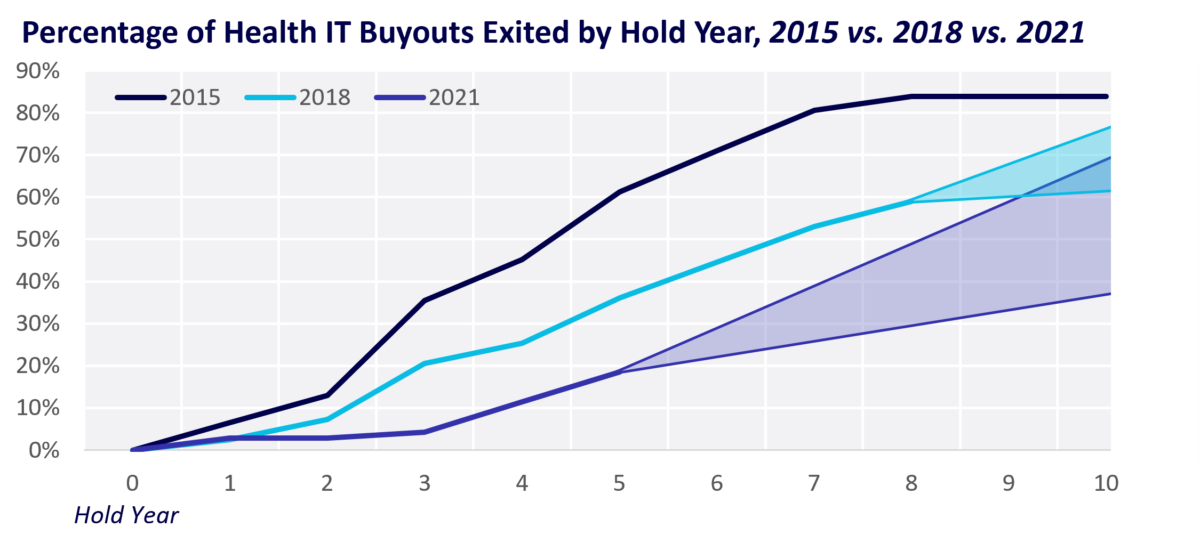
Instead, much of today’s portfolio overhang appears to stem from the exceptionally active investment environment leading up to COVID. Fewer than 60% of Health IT buyouts completed in 2018 and 2019 have been realized, and realization rates have generally declined for subsequent vintages, resulting in a steady accumulation of PE-backed companies since COVID. The data suggests today’s inventory reflects a realization cycle that has steadily lengthened over time, rather than a surge in pandemic-era investment activity.
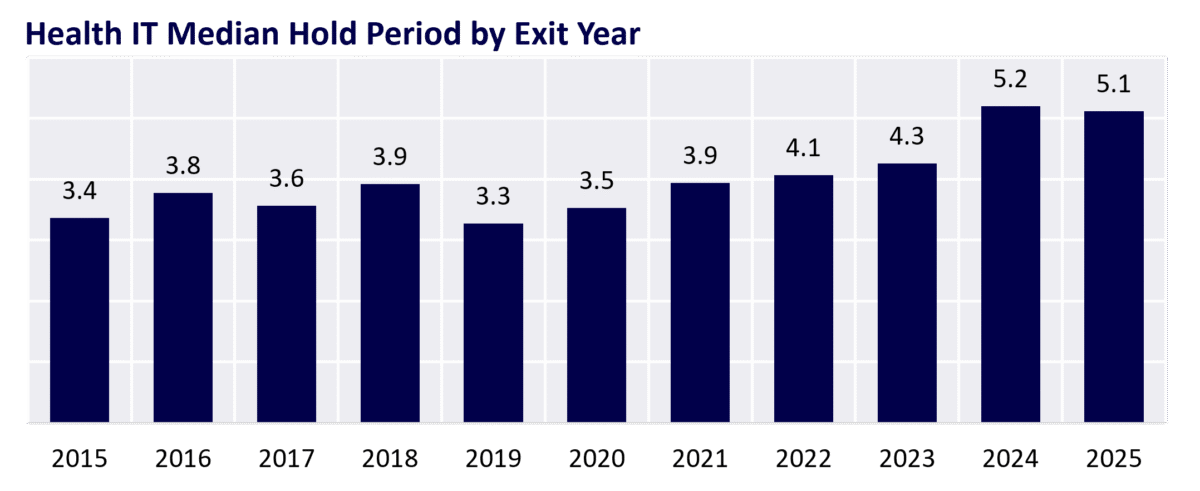
Buyout activity reached a new high watermark in 2024, while both 2024 and 2025 established record years for Health IT private equity exits. At the same time, median hold periods have increased from approximately 3.5-4.0 years before COVID to more than five years today. As a result, portfolio inventory has continued to accumulate despite record exit activity in 2024 and 2025.
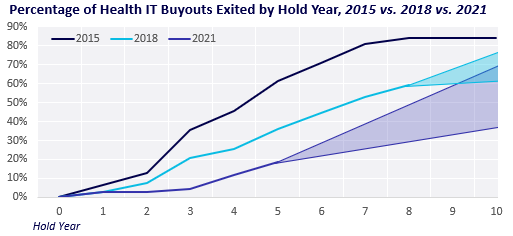
Buyout vintages have experienced a slowdown in exit pace. This slowdown is more pronounced for the COVID vintage, likely a result of elevated valuations during the period. While it remains too early to draw definitive conclusions on more recent vintages, the data suggests that realization timelines have shifted structurally higher. Elevated entry multiples have likely contributed to this trend by raising return thresholds and requiring a combination of earnings growth and improved financing conditions before sponsors can achieve attractive exits.
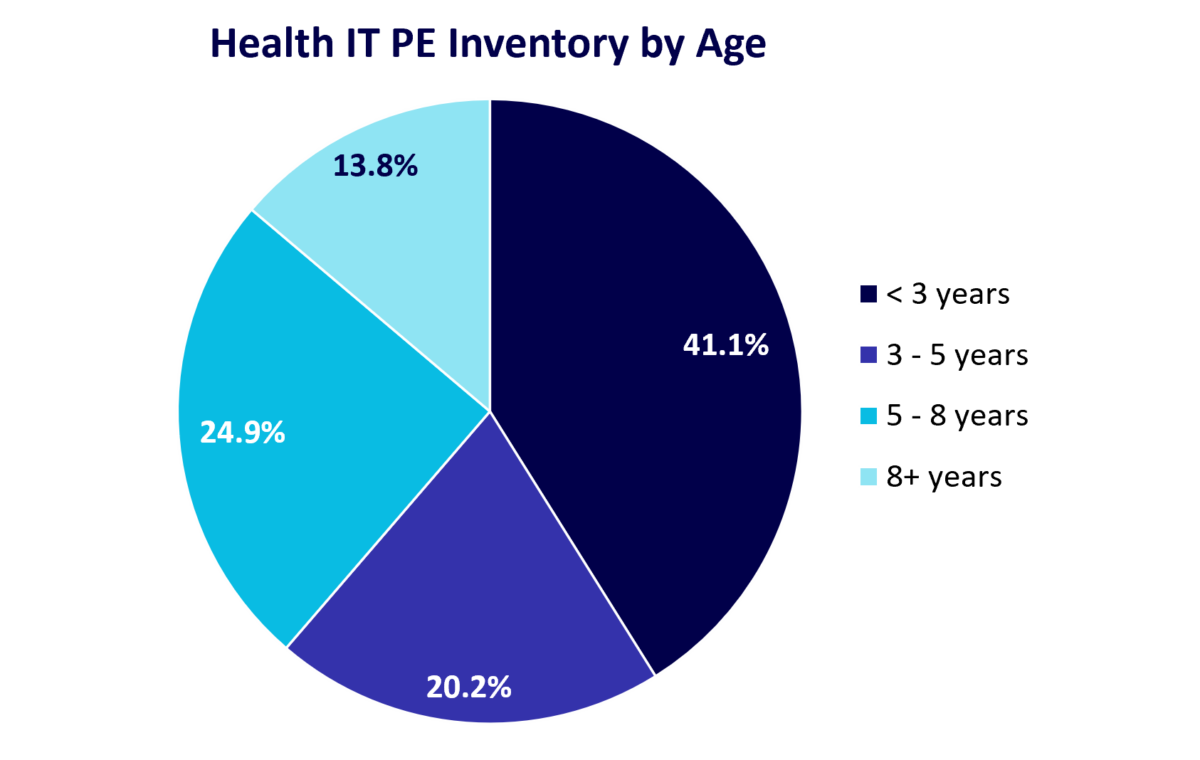
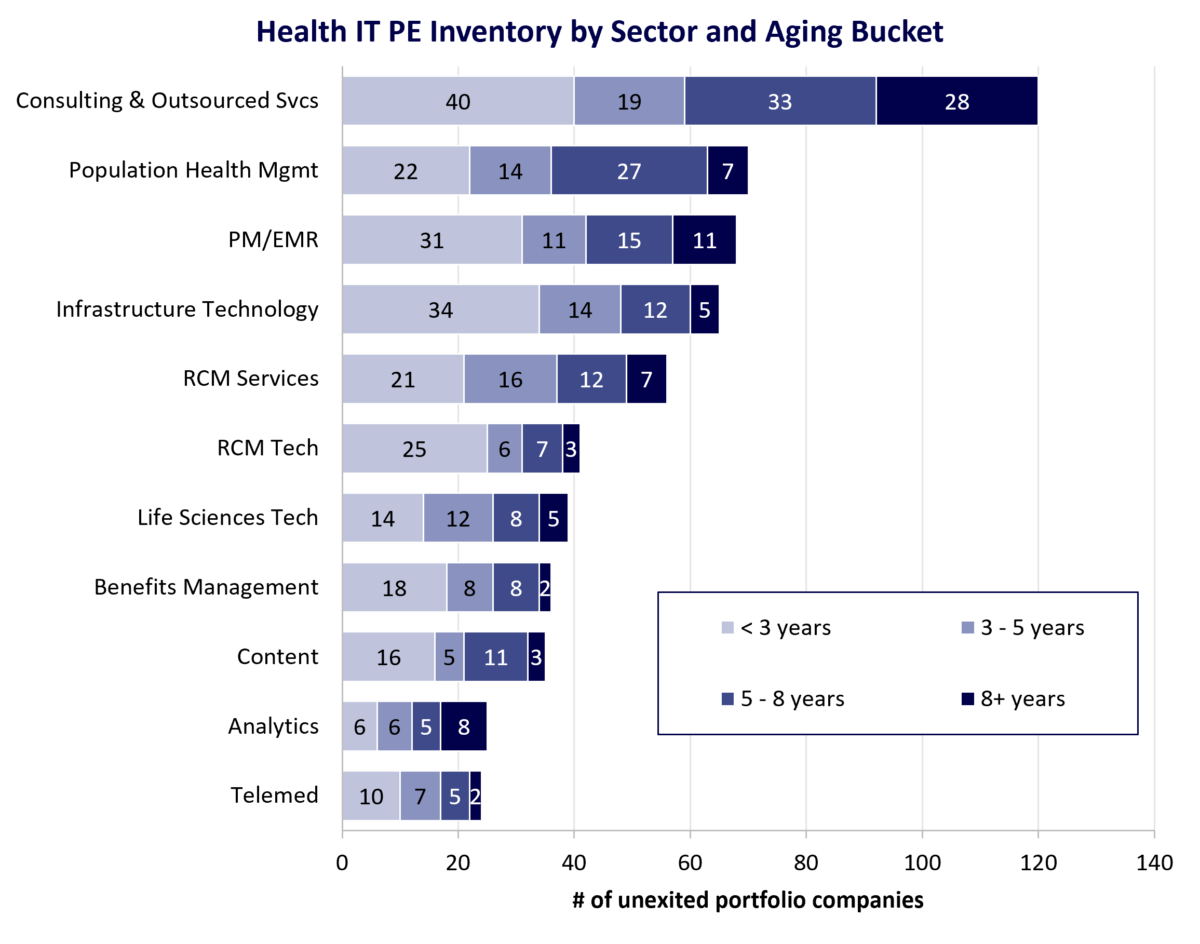
While Health IT exit activity has remained comparatively healthy, the sector has experienced a similar trend toward aging portfolio inventory as the broader private equity market. Of the 579 Health IT companies currently held by sponsors, 39% have been held for five years or longer, including 14% that have been held for more than eight years.
Although realization timelines have lengthened, sponsors continue to monetize assets through a balanced mix of strategic acquisitions and sponsor-to-sponsor buyouts, including continuation vehicles (CVs). Public market exits remain the exception rather than the rule. Following the brief reopening of the IPO window in 2020 and 2021, virtually all Health IT exits have been completed through either strategic M&A or secondary buyouts, underscoring the importance of private market liquidity in the current environment.
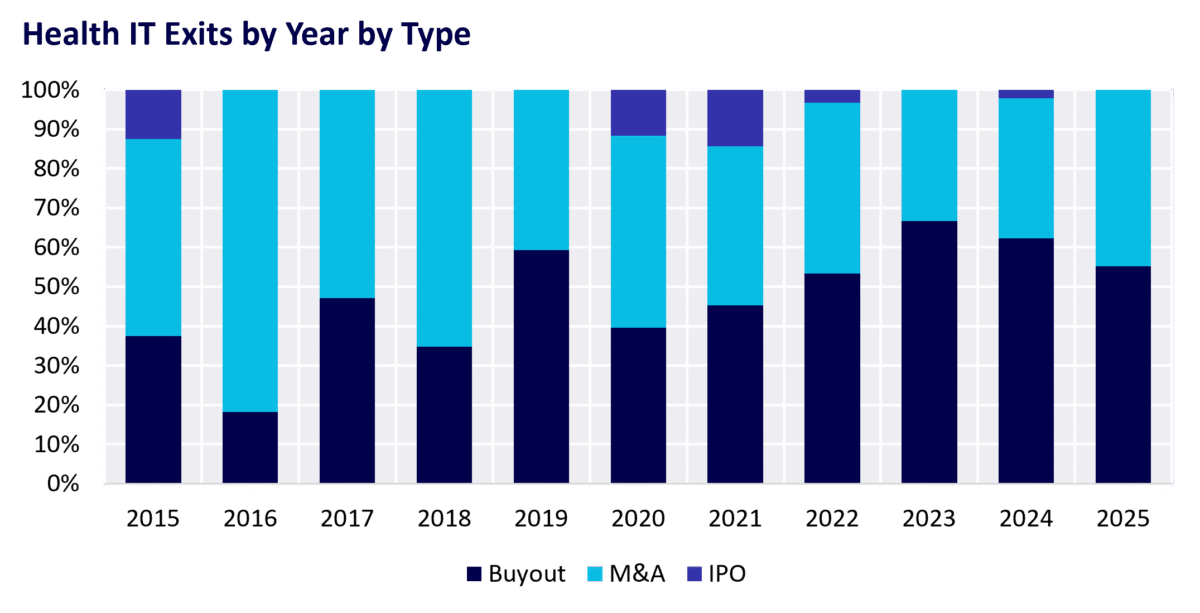
While the Health IT private equity overhang remains significant, the long-term data suggests a market that has remained fundamentally constructive despite a slower realization cycle. Investment activity has remained remarkably consistent over the past decade, with the notable exception of an exceptionally strong 2024, while exit activity has recovered meaningfully over the past two years. Sponsors continue to face a growing inventory of mature portfolio companies, and market conditions have yet to provide the level of liquidity many had anticipated. Nevertheless, Health IT has demonstrated resilience through a prolonged period of macroeconomic uncertainty. As financing markets continue to stabilize and buyers gain greater confidence in valuations and future earnings, even a modest improvement in market conditions could meaningfully accelerate exit activity and begin reducing today’s portfolio overhang.